How Do I Get Published? (Traditional Publishing, Self-Publishing, and eBooks)
by Elizabeth O. Dulemba
True story:
Dr. Seuss was at a cocktail party where he met a brain surgeon.
"Oh, you're that man who writes those children's books," the Doctor said. "Some Saturday, when I have a little extra time, I am going to write one of those."
Dr. Seuss replied, "Ahh yes. And someday when I have a little free time, I'll do brain surgery."
Traditional Publishing
Many people assume that writing children's books is easy and
that getting them published is too. I held the same misconceptions before I tried to break into the industry.
One of my favorite quotes is by Mem Fox,
"Writing a picture book is like writing 'War and Peace' in Haiku."
Picture books are their own unique art form and writing for children has particular and demanding requirements.
For instance, modern picture books contain less than 1000 words, many less than 300. Most picture books consist of 32 pages - that's it. (Click here for a great article on word lengths for childrens's books: "Wordcount Dracula" by Jennifer Represents...) Trying to fit a good story into such a small amount of text can be hard enough, but getting
published is even harder. In fact, breaking into the children's
publishing industry is so difficult, the slot machines in Las Vegas
offer better statistics.
One of the main reasons this industry is so tough is because most people get into children's books with projects they are passionate about
and emotionally attached to. Often their story will be an anecdote from their past or a story about their children (or a puppy!), or they have a moral lesson they want to impart (this is called didactic and is a serious no-no in kids books). They feel the world would be a better place with their story in it - their book could change lives! And they end up resenting the walls they hit in the industry.
And there are some serious walls.
To give you an idea from personal experience, it took me three years to land my first contract as illustrator.
That's considered very fast. It took me seven years to sell my first picture book manuscript as author/illustrator (Soap, soap, soap, Fall '09). Again, faster than average. And it took me ten years to sell my first children's novel (A Bird on Water Street, Fall '13). That is actually the average. But I have friends who are
still trying to get published after ten years or more of trying.
But new books come out all the time so somebody
is getting published, right?
It's true,
and if you are determined, there are things
you can do to increase your chances in the competitive world of children's books. (Self-publishing and eBooks are different
subject entirely, read below.*)
First, understand that children's books are a business and must be approached in a professional manner just as you would with any other industry.
You wouldn't dive into the stock market without researching like crazy,
children's books are no less of an endeavor. Learn as much as you can about the business
side of children's books.
There
are rules on how manuscripts should be formatted (33k .pdf) and submitted to publishing
houses. Not following the rules will almost guarantee your work
is
passed over. (And trust me, manuscripts from those who haven't done their homework stand out like flourescent beacons!)
Click here for an article, "In Praise of Reading Slush" by agent, Nathan Bransford.
Update! Many agents and editors are now accepting digital submissions to review on their Kindles and such. This requires new rules of formatting which are spelled out wonderfully by Agent Vickie Motter at "Navigating the Sluch Pile."
Target your submission. Knowing where to send your manuscript is extremely important.
Sending a picture book manuscript to a publisher who only does YA (young
adult) will result in failure. Don't send a manuscript to
a house that doesn't accept "unsolicited manuscripts" (solicited manuscripts are submitted by agents), it will just go in the
trash. Don't send illustrations with your manuscript unless you are a professional illustrator (doing otherwise is presuming to do the editor's job - they select the illustrator).
See a pattern? Learn the rules so you can jump the hurdles. Educate yourself. The more
you know about the inner workings of this business, the better chance
you'll have.
How do you learn about the industry?
A great place to start is with the Society
of Children's Book Writers and Illustrators. This
is the largest writing organization of its kind in the world, it is the umbrella that holds us together. The SCBWI provides wonderful
resources for new writers, including lists of
publishers
and
what
they
want. They also hold national and regional conferences where you can network, meet editors and art directors, and learn more about the biz. There are chapters all over the world, so most likely there is one near you. In my experience, children's book creators are some of the most interesting and friendly people you will ever meet. So, even if you never get published, it's a great and supportive group of people to hang out with. Volunteering with SCBWI can definitely improve your exposure. For instance, I WAS the Illustrator Coordinator for the Southern Breeze chapter (Alabama, Georgia, and the Florida panhandle) of SCBWI and I can say it definitely helped my career. Visit SCBWI.org to find your local chapter. 
You can also learn about the various publishing houses, and how to submit to them, in the Children's Writer's & Illustrator's Market (updated annually), or online at
The Children's Book Council Member's List.
 Another fantastic Another fantastic
 resource
is THE
COMPLETE IDIOT'S GUIDE TO PUBLISHING CHILDREN'S BOOKS by Harold Underdown. Harold
is a working editor, very knowledgeable, and highly supportive of those starting
out.
He also has a good resource at The
Purple Crayon. resource
is THE
COMPLETE IDIOT'S GUIDE TO PUBLISHING CHILDREN'S BOOKS by Harold Underdown. Harold
is a working editor, very knowledgeable, and highly supportive of those starting
out.
He also has a good resource at The
Purple Crayon.
As I touched on above (and mention again because I receive so many requests to illustrate manuscripts that have not yet been sold
to a publishing house), one of the things you'll learn is that unless you are a professional illustrator, you do not need illustrations to accompany your manuscript.
Publishers prefer to select the illustrator for your book because they take many issues into account. For instance,
they may pair a beginning writer with an established illustrator so the book will garner more marketing attention.
However,
once
you have a contract with a publisher (which is the hard part) you can certainly
suggest
an illustrator if you have someone in mind. Just don't expect your opinion to have much weight.
You may be the author, but children's books are a business (have I made that clear?) and the publishers have the professional experience.
Caveat: Some new, small houses actually do prefer illustrated manuscripts as they don't have the resources to handle this themselves. Of course, that can also mean they don't have marketing budgets either.
Another thing you will learn is that it can be harder to
find
a
good
agent than to find a publisher. Especially for picture books, as there's not much money to be made, yet lots of work to be done to break into the market. Wait until
you have some projects under your belt, or a really amazing offer coming in
that you
need help negotiating before signing, to pursue an agent. Most literary agents charge 15% on average (art reps are different) and a good one will earn every penny of that. As with all things,
research
to
find a good one.
There are three classes of agents: the creme-de-la-creme (there are some great ones out there), the underqualified,
and the crooks. Anyone who asks for money up front, falls into the
last
category. Agents work like realtors, they get paid when your project sells. If you're unsure, a good
place to check out an agent's background is at PREDITORS & EDITORS.
Of course, you need to make sure your manuscript
is exceptional. Books must sell for publishers to buy new ones. Today’s
market is
especially tough, and nothing less will make it through (there are always exceptions, but let's not go there). Two great resources
  for
studying the art of writing for children are: for
studying the art of writing for children are:   WRITER’S GUIDE TO
CRAFTING STORIES FOR CHILDREN by Nancy Lamb, and PICTURE
WRITING: A NEW APPROACH TO WRITING FOR KIDS AND TEENS by Anastasia Suen.
Look into online classes and courses in your area. I also have numerous online resources in my LINKS section.
Also, create or join a critique group - a group of writers who review and edit each other's work and cheer each other along on this difficult journey. WRITER’S GUIDE TO
CRAFTING STORIES FOR CHILDREN by Nancy Lamb, and PICTURE
WRITING: A NEW APPROACH TO WRITING FOR KIDS AND TEENS by Anastasia Suen.
Look into online classes and courses in your area. I also have numerous online resources in my LINKS section.
Also, create or join a critique group - a group of writers who review and edit each other's work and cheer each other along on this difficult journey.
Many beginning writers write in a style they fondly remember from their childhood. With technology and today’s
fast paced world, that antiquated
presentation holds little interest for today’s
kids. Research
the market. Go to
your local independent bookstore and read what is out
there. 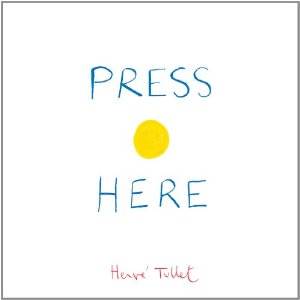 Buy lots of books - support your field! Some great, very modern picture books to study
are DON'T LET THE PIGEON DRIVE THE BUS and PRESS HERE. These titles will give you an idea of how radically different
children’s
literature is today, even though the feelings of childhood remain constant. Buy lots of books - support your field! Some great, very modern picture books to study
are DON'T LET THE PIGEON DRIVE THE BUS and PRESS HERE. These titles will give you an idea of how radically different
children’s
literature is today, even though the feelings of childhood remain constant.
You do need to know the facts — it wouldn't be kind of me not to share them. Reality is less
than 1% of the manuscripts received by publishing houses actually become books.
I know it's depressing. I'm sorry, but it's the truth. Here are the stats:
"81% of the population feels they have a book inside them . . .
20% would do a picture book, cookbook, etc.
6 million have written a manuscript.
6 million manuscripts are making the rounds.
Out of every 10,000 children's books, 3 get published."
- Jerrold Jenkins. 15 May 99.
Here's another interesting factoid. According to the Business Insider, being a creative writer is the second most competitive job in America to get - before athletes, stock-brokers, actors, and musicians. (Choreographer was first.) Read: "10 Competitive Jobs That Everyone Wants But Hardly Anyone Gets."
More tough news. A common misconception is that all published authors must be rich. So, is there money in it? The stats are as follows. In all the arts:
3% make the 'big bucks' (these are the creators
most people have heard of).
12% make enough to live on (and boy is that relative).
85% make under $10-12k a year.
As author and marketing consultant Seth Godin says, "The only people who should plan on making money from writing a book are people who made money on their last book. Everyone else should either be in it for passion, ... or joy."
In other words, don't quit your day job, and expect lots of rejection. But
also know, there are such
things as “good rejections.” If you receive a hand-written
note, or requests to see future works, that is a very good sign. Even Ted Geisel
(Dr. Seuss) received 27 rejections before his first book was published. (And Kathryn Stockett's "The Help" was rejected 60 times before that best-seller finally sold.)
In children's books, you realistically
cannot expect your one-time whimsical project to go anywhere, but you can expect
your
10th toiled over manuscript to finally grow some legs.
All that said, it is possible to break in.
If
you
have
lots of stories in you, and you’re willing to work very hard, this may be a valid
career path for you. But please, don’t take it lightly. Almost every published
author or illustrator you meet has jumped unbelievable hurdles to get their work out there.
You'll
quickly understand that when you try it yourself. This business is for the stubborn
and the persistent (to an extreme). Many call it "The 4 P's": Passion, Patience, Perseverance,
and Postage.
So why would anybody go into this crazy, manic-depressive business? Because there is no feeling like seeing a child joyfully dive into a book you created.
And there's no equal to creating and sharing your stories with the world. In my opinion, people need three things to survive–food, shelter, and wonder.
Storytellers have been providing that wonder throughout history - it is a long and proud tradition. As far as the unbelievable hurdles that must be jumped to make it in this business?
Personally, I like to set my dreams high. That way, even if I only make it half way there, it's still pretty darned good.
Writing quotes:
“Writing is easy: all you do is sit staring at a blank sheet of paper until the drops of blood form on your forehead.” - Gene Fowler
“It is easy, after all, not to be a writer. Most people aren’t writers, and very little harm comes to them.” - Julian Barnes
“You have to write the book that wants to be written. And if the book will be too difficult for grown-ups, then you write it for children.” - Madeleine L’Engle
More Resources:
SCBWI resources for beginners - click here
Unasked-For Advice to New Writers About Money
The Reality of a Times Bestseller
Anatomy of a Picture Book by Scott Franson
"One in a Million" by Seth Godin - practical advice for students
"Hope and the magic lottery" by Seth Godin
Moonrat's Rundown of Publishing Options by Editorial Ass
The Dark Art of Pricing by Jessica Hische
*Self-publishing, also known as Vanity Publishing or Print-on-Demand, is
a completely different animal with different issues. Yes, you can pay to have
your book published by the many companies who
make this available, but don't confuse this with traditional publishing.
Most bookstores will not carry self-published books because self-publishers seldom have the expertise or budget to seriously edit
or market their books. They have not been through the checks and balances of traditional publishing houses, and because of retail restrictions, these books typically
do not
do well commercially. (Note: For these reasons, they generally cannot further my career and I don't take them on as an illustrator.)
If you don't understand the difference, it breaks down like this: In self-publishing, you pay them; in traditional publishing, they pay you.
But sometimes self-publishing IS appropriate. It
should
be
considered
for
personal
projects
for
family
and
friends,
or for
niche markets that a large publishing house would typically not cover.
I recently consulted on a picture book with two artist friends who collaborated to self-publish. Because of their established markets and areas of expertise, self-publishing actually made more sense. Their book is doing very well and they landed a contract with a major (traditional) publishing house as a result. But this is an anomoly - a freak incident that rarely occurs.
That said, publishers are spending less on marketing than they used to, and some creators are choosing to keep their profits, rather than only a percentage royalty, and pour them into self-marketing instead. Marketing a book is a beast unto itself, but for some people, it makes more sense. Kickstarter and similar programs are viable options for creators willing to put in the legwork. There are also groups that offer support and guidance if you want to make your own path. Independent creators are getting more savvy. Perhaps it's the right path for you. But again, do your research!
To quote Chip MacGregor, Literary Agent:Who should self-publish?
The answer is simple: Only authors who can sell their books. Period. If you can't sell your book -- either by speaking to a group or pitching them to your organization or offering them to your regular readers, don't self-publish. You'll just lose money. It's extremely rare for a fiction writer to sell any self-published books, no matter what company name is on the spine. So be aware, and do your homework.
Resources for self-publishers:
How Much Money Do Self Publishers Make?
The Book Designer
e-Books getting the words out (via the AJC)
** Note to beginning illustrators. If you've been approached to illustrate a book by a self-publisher - please read this before you commit to anything.
The Good News
One side affect of self-publishing is that a lot of self-publishers discovered their work would carry more clout if they incorporated and took on creators other than themselves. Therefore, there has been an explosion of small publishing houses who are now open to unsolicited manuscripts. It raises your chances of getting published, although marketing is still the elephant in the room. With such a flux of titles in the marketplace, getting your book found is harder than ever, and many of these houses still don't have budgets for serious marketing. Also, with so many unrecognized publishing house names, bookstores are still wary to carry titles from houses they don't know.
So you have to ask yourself what your goal is - to just be published, or to have your book sell. If it's the latter, then you have two hurdles in front of you. Most authors these days, whether traditionally or self-published, are having to do their own marketing. Even the big houses expect it. It's why being an author is such a multi-faceted career. Along with writing, most of us also do school visits, speak at conferences and festivals, do book signings, are active on social media, etc. It all helps sell our books.
*eBooks
Everybody was afraid of eBooks and apps when they began - that they would kill the book. Happily, that has not come to pass and the market seems to have levelled out. eBooks are just another way to absorb content (and potentially create more readers). While apps seem to be more like games, a completely different market that doesn't really compete with books at all. CLICK HERE to read about the creation of my first picture book app, LULA'S BREW, or visit the blog e is for Book to read up on current eBook trends in the industry. |
|


